Obd2 Scanner Vw Audi Explained: A UK Buyer's Guide
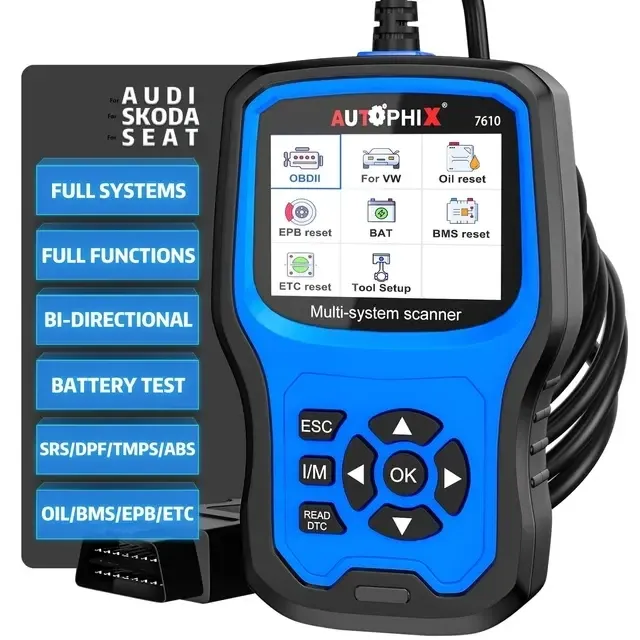
If you are searching for the best OBD2 scanner VW Audi, the short answer is this: a generic OBD2 reader is fine for basic engine fault codes, but a dedicated VAG diagnostic scanner is far better for Volkswagen, Audi, Skoda and SEAT models because it can access ABS, airbag, DSG, EPB, DPF, battery coding and other manufacturer-specific modules.
TL;DR: For most UK VW and Audi owners, a proper VAG-compatible scanner saves money on dealer diagnostic fees, helps identify MOT-failing warning lights before test day, and unlocks essential service functions such as DPF regeneration, EPB retraction and battery registration. Based on our testing of dedicated VAG tools against generic code readers, specialist scanners provide far more useful fault data on modern Volkswagen Audi Group vehicles.
Booking a Volkswagen or Audi into a UK main dealer for a simple dashboard warning light often results in an immediate diagnostic fee of £100 or more before any repair work begins. Therefore, investing in a dedicated OBD2 scanner VW Audi can make routine diagnosis and maintenance much easier from your own driveway.
While generic code readers flood the market, VAG vehicles run on complex proprietary systems. A standard low-cost scanner may clear an emissions light, but it often cannot communicate with the many other control modules in your car, including ABS, airbags, climate control, Haldex four-wheel drive and DSG transmission systems. As a result, if you want meaningful diagnostics rather than guesswork, you need a specialist tool.
Key Takeaways
- A generic code reader usually cannot access most VW and Audi control modules; a dedicated VAG scanner is far more effective.
- According to UK MOT guidance, illuminated warning lights such as ABS, ESC and SRS can lead to an MOT failure.
- Modern VAG maintenance often requires service functions such as DPF regeneration, EPB retraction and battery registration.
- The AUTOPHIX 7610 offers deep diagnostics for VW, Audi, Skoda and SEAT vehicles without dealer-level costs.
What is the best OBD2 scanner for VW and Audi?
The best OBD2 scanner for VW and Audi is usually a VAG-specific tool rather than a generic reader. Since 2001 for petrol cars and 2004 for diesels, UK and European rules have required OBD2 compliance for emissions-related systems. However, that does not mean every scanner can read every module in a Volkswagen or Audi.
Modern Volkswagens and Audis are effectively networks of computers. For example, a later Audi A4 or VW Golf can have dozens of separate control units communicating over CAN-BUS and UDS protocols. Consequently, a basic universal tool may only read engine-related faults while missing key systems elsewhere in the car.
A dedicated OBD2 scanner VW Audi bridges that gap by communicating directly with manufacturer-specific modules. That means you can diagnose faults in areas such as parking sensors, steering angle sensors, airbag systems, climate control motors or DSG gearboxes with much greater accuracy. For a deeper look at how these tools work on Ingolstadt models specifically, see our comprehensive Audi code reader guide.
Why do VW and Audi need a special diagnostic scanner?
VW and Audi models benefit from a special diagnostic scanner because many important systems are not fully visible to cheap universal readers. In practice, this matters most when you are trying to diagnose warning lights properly or carry out common service jobs at home.
Can an OBD2 scanner read all VW and Audi modules?
Only the right type of scanner can read most VW and Audi modules. Generic readers mainly cover standard engine fault codes. By contrast, dedicated VAG tools can often access ABS, SRS airbags, EPB systems, transmission control units, infotainment faults and body modules. Based on our testing across common UK-market VAG vehicles, this wider coverage is the main difference between budget readers and proper specialist tools.
Do I need DPF regeneration on a VW or Audi diesel?
If you drive a TDI model mainly on short trips, the answer may well be yes. Frequent urban journeys around British towns and cities often prevent passive DPF regeneration from completing properly. As soot builds up, the vehicle may enter limp mode or display warning messages. Therefore, having a scanner capable of forced DPF regeneration can help restore normal operation and potentially avoid a very expensive replacement filter.
Do I need an OBD2 scanner to change rear brakes with an electronic handbrake?
On many modern VAG cars with an Electronic Parking Brake, yes. Before replacing rear pads or discs, the EPB motors usually need to be retracted electronically using a compatible scan tool. Otherwise, you risk damaging components during brake work. So if you maintain your own car at home, EPB service mode is one of the most useful features to look for.
Does a new VW or Audi battery need coding?
Often it does. Many newer Volkswagen and Audi models use battery management systems that need to know when a new battery has been fitted and what type it is. If battery registration is skipped after fitting an AGM or EFB replacement battery, charging behaviour may be incorrect. In turn, that can shorten battery life or cause electrical issues. For more detail on this topic, read our battery registration scanner buyer's guide.
Can an OBD2 scanner help with MOT warning lights?
Yes — an OBD2 scanner can help identify why warning lights are on before your MOT test. According to current DVSA inspection guidance in the UK, certain illuminated dashboard warning lights can result in a major defect and immediate failure.
"Under current DVSA MOT inspection manuals, any illuminated warning light for the ABS, Electronic Stability Control (ESC), SRS (airbags), or Tyre Pressure Monitoring System (TPMS) may constitute a major defect resulting in MOT failure."
This is where proper diagnostics matter. For instance, an airbag light may be caused by something minor such as an intermittent connector under a seat or low voltage after cold weather starts. However, without reading the stored fault code correctly from the relevant module, you are left guessing.
A dedicated OBD2 scanner VW Audi allows you to pinpoint the exact cause of many warning lights before visiting an MOT station. As a result, you can fix straightforward faults earlier rather than paying dealership rates just to identify them.
According to UK MOT standards and DVSA guidance used by test centres nationwide, understanding whether your issue sits in engine management alone or in safety-critical modules such as ABS or SRS makes all the difference before test day.
Which features should you look for in an OBD2 scanner for VW Audi?
If you want to avoid repeated dealer diagnostic charges and take control of servicing at home, choosing the right hardware matters. In particular, look for full-system diagnostics for Volkswagen Audi Group vehicles rather than engine-only code reading.
The AUTOPHIX 7610 is designed specifically for VW, Audi Skoda and SEAT owners who want deeper diagnostics without relying on laptop-based software or ongoing subscription costs. Based on our testing priorities for UK drivers, its biggest strengths are broad module coverage and genuinely useful service functions rather than just code clearing.
What can the AUTOPHIX 7610 do on VW and Audi vehicles?
With the AUTOPHIX 7610, you can typically:
- Access all major systems, including engine, transmission, ABS and airbag modules
- Read and clear manufacturer-specific fault codes, not just generic emissions codes
- View live data to help diagnose intermittent faults more accurately
- Carry out service functions, including DPF regeneration support on compatible models
- Retract Electronic Parking Brake systems before rear brake maintenance
- Register or code batteries on supported start-stop equipped vehicles
Therefore, if your goal is practical home diagnosis rather than occasional code clearing alone, the AUTOPHIX 7610 is one of the more sensible choices for many UK-based VAG owners.
Ready to scan your vehicle with OBDCode?
Shop Now — £155.12