White, blue or black exhaust smoke: drive or stop?
Last reviewed · OBDCode UK editorial
UK petrol, diesel and combustion-engine hybrid cars with a visible plume from the exhaust tailpipe.
Use another route when
- Smoke, steam or a burning smell from beneath the bonnet — switch off safely and treat that as a different fault, not a tailpipe-colour check.
- Any exhaust smell inside the passenger compartment — leave the vehicle, arrange recovery and use the cabin-fume guide.
- Fully electric vehicles with no combustion engine or exhaust tailpipe.
Can you keep driving?
Drive only for brief condensation. Continue only when fine white vapour is confined to a cold start, clears fully as the exhaust warms and no warning, fluid loss or change in running is present. Persistent coloured smoke means stop at the nearest safe place and arrange diagnosis before another journey.
Do not rev the engine to reproduce smoke. If a plume appears during a normal start in open air, note whether it clears fully as the exhaust warms. If it persists, park safely and switch off. Use recovery when any stop condition below is present. If cabin fumes make anyone unwell, move into fresh air and seek urgent medical advice.
Stop and escalate when
- Smoke or vapour is dense enough to make it hard for other road users to see, or smoke is coming from beneath the bonnet
- The temperature rises, an overheating warning appears, or the oil-pressure warning stays on
- Oil or coolant is below the handbook minimum when checked safely, or its level is falling quickly
- The engine-management light flashes, the engine runs severely roughly, power falls markedly, or the vehicle no longer responds normally
- Fuel or exhaust fumes enter the cabin, or an occupant develops headache, dizziness, weakness or nausea
- Exhaust gases can contain carbon monoxide. Stay in open air and never run the engine in an enclosed space.
- Hot components and pressurised fluids can burn you. Let the vehicle cool and never open a hot cooling system.
What the symptom may mean
These are decision branches, not a diagnosis or a UK frequency ranking.
- Brief cold-start water vapour — is consistent with condensation when it clears fully. Water made during normal combustion can condense in a cold exhaust and appear as a fine white plume. The useful distinction is not white versus no white: it is whether the vapour disappears completely as the exhaust warms and whether any warning, fluid loss or change in running accompanies it.
Next evidence: Observe it only during normal warm-up in open air. If the plume remains once the exhaust is warm, move to the persistent-white branch rather than assuming condensation.ungraded — treat as general guidance
- Persistent white smoke or vapour — can accompany coolant entering a hot combustion or exhaust path, but can have other causes. A white plume that remains after warm-up is not the normal condensation pattern. Falling coolant or overheating makes an internal coolant path more concerning, but smoke colour does not prove a failed head gasket, cracked component or any other single part.
Next evidence: Stop the normal journey and ask a garage to check the cooling system and engine evidence before authorising dismantling. Overheating, low coolant or severe rough running means recovery.ungraded — treat as general guidance
- Blue-grey smoke — is evidence that oil may be reaching combustion or the hot exhaust. The colour points towards an oil-burning path, not the failed component. Smoke timing alone cannot reliably separate crankcase-ventilation, valve, cylinder or turbocharger faults, and an apparently normal oil level does not rule them out.
Next evidence: Record when it occurs and give the garage the oil-level history. Do not deliberately accelerate to create smoke or approve a turbocharger or internal-engine repair from colour alone.ungraded — treat as general guidance
- Black or sooty smoke — can indicate that the engine is producing more soot than the exhaust system should release. Excess fuel, restricted air, poor combustion or an emissions-control fault are possible directions, not diagnoses. The colour cannot identify an injector, airflow sensor, EGR valve, boost leak or particulate filter by itself.
Next evidence: Avoid heavy acceleration and arrange a controlled garage diagnosis. Use recovery if smoke is dense, the engine runs badly, power is unsafe, or there is a strong fuel smell.ungraded — treat as general guidance
Observation-level checks
- Separate brief vapour from persistent smoke (Green observation)
Only if the plume appears during a normal start outdoors, observe from clear of the tailpipe and traffic. Do not ask anyone to rev the engine and do not stand in the exhaust stream. Note the colour in daylight, whether it is fine or dense, whether it clears fully as the exhaust warms, and whether it returns when the engine is already warm.
What it means: Fine white vapour that clears fully with no other symptom supports condensation. Any white, blue-grey or black plume that remains after warm-up needs garage assessment; appearance alone does not identify a failed part.
ungraded — treat as general guidance
Stop if: The plume is dense, persists after warm-up, enters the cabin, comes from beneath the bonnet, or accompanies a warning, severe rough running or loss of power.
Fine white vapour clears fully and there are no other symptoms → normal driving may continue, but recheck the decision if it appears with a warm engine.
Coloured smoke persists or any stop condition appears → stop at the nearest safe place; arrange a garage or recovery as directed by the safety block.
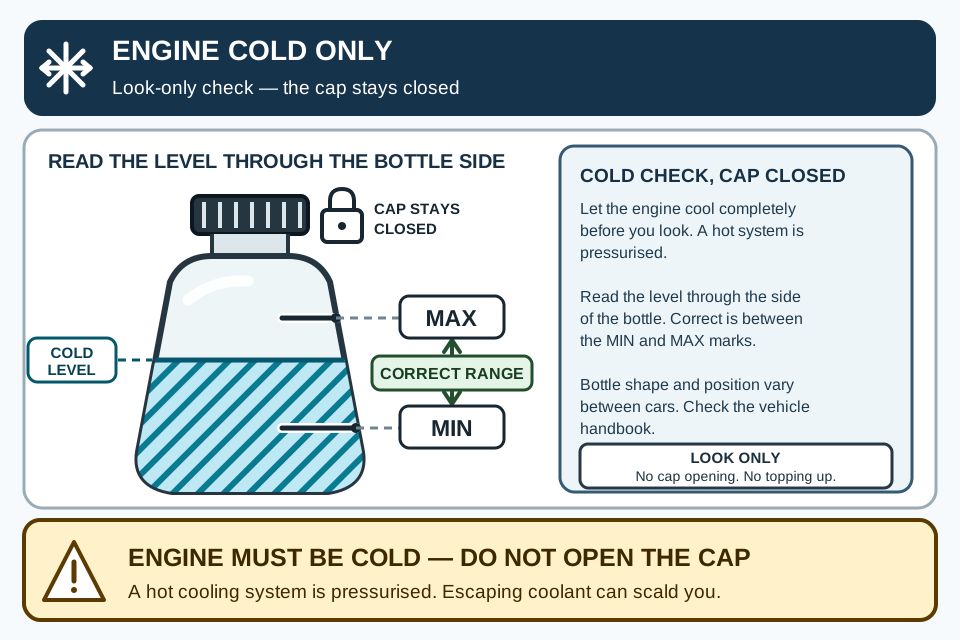
- View the coolant level only when fully cold (Green observation)
With the engine fully cold and the car on level ground, follow the owner’s handbook and view the expansion-tank level against its marks without opening the cap. A photograph from the same angle can show whether the cold level changes. Never open a hot or pressurised cooling system.
What it means: A falling cold level alongside persistent white smoke raises the urgency of a possible coolant path, but it does not prove a head-gasket fault. A stable level does not rule one out.
ungraded — treat as general guidance
Stop if: The engine is warm, the level is below the handbook minimum, the level is falling quickly, steam appears, or a temperature warning is present.
Correct stable cold level and only brief vapour → keep the record; use the other observations before deciding it was condensation.
Low or falling level, persistent white smoke or a temperature warning → do not drive; arrange recovery and cooling-system diagnosis.
- Record the engine-oil level by the handbook method (Green observation)
Park on level ground, switch off and use the owner’s handbook for the vehicle’s electronic display or dipstick conditions. Record the reading; do not reach near moving or hot components and do not add oil merely to test whether the smoke changes.
What it means: Low or falling oil with blue-grey smoke makes continued driving unsafe and helps the garage choose the next test. One normal reading does not identify or exclude the source.
ungraded — treat as general guidance
Stop if: The oil-pressure warning is on, the level is below the handbook minimum, the reading is unavailable or unreliable, or blue-grey smoke is dense or persistent.
Level is within the handbook range → record it for the garage; do not treat it as proof that no oil is burning.
Low or falling level or an oil-pressure warning → switch off and arrange recovery rather than driving to a garage.
- Record warnings and how the engine behaves (Green observation)
Once safely stationary, photograph the dashboard and note engine temperature, whether the engine-management light is steady or flashing, rough running, loss of power and any fuel or exhaust fumes. Do not clear codes, disconnect the battery or road-test the vehicle to reproduce the smoke.
What it means: These observations set urgency and give a technician useful evidence. They still do not turn smoke colour or a fault code into a confirmed parts diagnosis.
ungraded — treat as general guidance
Stop if: The engine-management light flashes, temperature rises, the oil-pressure warning appears, the engine runs severely roughly, power is unsafe, or fumes enter the cabin.
No warning and the plume cleared fully from cold → monitor for recurrence without deliberate testing.
Any warning or running change with persistent smoke → switch off safely and use garage or recovery escalation.
MOT relevance
Persistent visible smoke can fail an MOT; smoke or vapour that could obscure other road users can be a Dangerous defect.
The DVSA test depends on the vehicle’s fuel type, age and fitted emissions equipment. In applicable petrol tests, dense blue or clearly visible black smoke is a Major defect. For diesel tests, excessive smoke or vapour of any colour that is likely to obscure other road users is Dangerous, and visible smoke of any colour from a vehicle fitted with a diesel particulate filter is Major. Colour alone cannot predict the complete MOT result.
Source: DVSA MOT inspection manual, section 8.2 Exhaust emissions · grade A
The tester follows the procedure and limits that apply to the particular vehicle; this guide does not authorise pre-test revving or an attempt to clear smoke by driving.
UK cost
We don’t have a verified UK price range for this job yet. Smoke colour is a symptom, not a priced repair. The possible garage work is too varied for one evidence-based UK range before diagnosis.
What to give the garage
- Fuel type and whether the engine was cold or already warm
- White, blue-grey or black appearance in daylight, whether fine or dense, and whether it cleared fully
- Dashboard warnings, temperature, rough running or loss of power
- Cold coolant and handbook oil-level observations, including any recent top-ups
- A safely recorded stationary video if available
- Any stored codes already read without clearing them
- Recent engine, cooling, turbocharger, injector or emissions work
Related pages
- coolant keeps disappearing no leak — Cold coolant-level evidence and no-drive conditions when the level falls.
- exhaust smell inside car — Cabin fumes are a carbon-monoxide stop-and-recovery route, regardless of plume colour.
- car loses power when accelerating — Power loss with smoke is an escalation condition, not a reason to reproduce the fault.
- car diagnostic test cost — Questions to ask about diagnosis before authorising parts.
Frequently asked questions
Is white exhaust smoke on a cold morning normal?
Fine white vapour can be normal condensation only when it clears fully as the exhaust warms and there is no warning, rough running or fluid loss. A plume that persists with a warm engine is not the same pattern and needs garage assessment.
Can I drive with blue or black exhaust smoke?
Do not continue a normal journey with persistent blue-grey or black smoke. Stop at the nearest safe place and arrange diagnosis. Use recovery if the smoke is dense, a warning appears, the engine runs badly, power falls, fluid is low or fumes enter the cabin.
Does persistent white smoke prove the head gasket has failed?
No. Coolant entering combustion is one possible explanation, especially if the cold coolant level falls or the engine overheats, but colour alone cannot identify a head gasket or any other component. A garage should confirm the cause before dismantling.
Sources
- DVSA MOT inspection manual — 8.2 Exhaust emissions · grade A · accessed · supports mot, dense smoke safety, dpf visible smoke
- The Highway Code — breakdowns and incidents · grade A · accessed · supports safe stop, recovery
- RAC Drive — Engine smoking: why it happens and what to do · grade B · accessed · supports cold condensation, persistent white smoke, blue grey smoke, black smoke
- NHS — Carbon monoxide poisoning · grade A · accessed · supports cabin fume health escalation
General guidance, not professional advice.